Verification Fee Before Withdrawal: Scam Warning & Recovery Briefing (2026)
If you are reading this after being told to pay a verification fee before withdrawal, this is not a general explanation page. This is a structured recovery briefing designed to help you understand exactly what is happening, why it is happening, and what actions you should take immediately.
Most people encountering a verification fee before withdrawal request are already in a locked financial situation. This document is written for that stage — not theory, but response strategy.
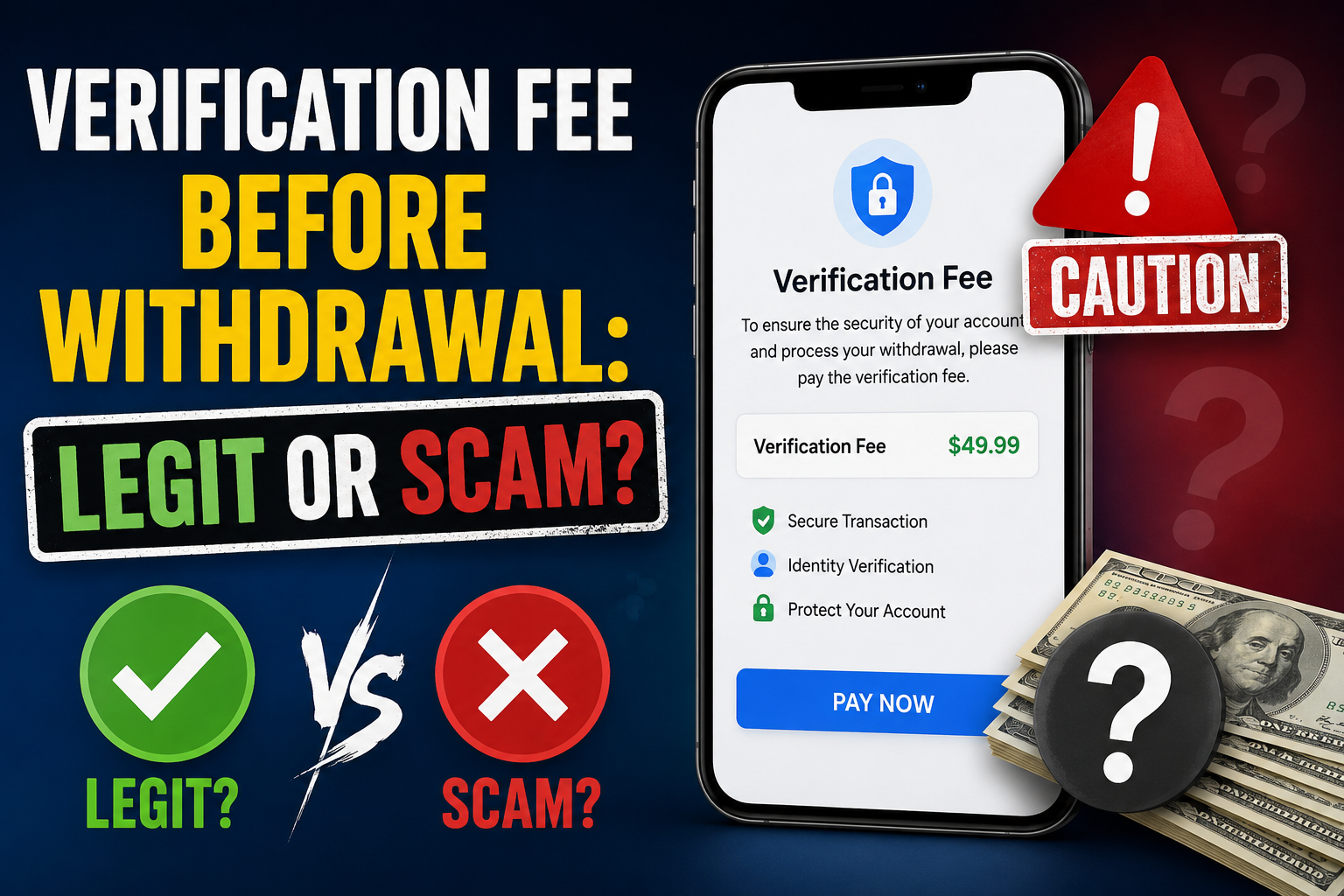
1. Situation Assessment: What You Are Likely Experiencing
If you are facing a verification fee before withdrawal request, your situation usually falls into one of three categories. Identifying which one applies is critical before taking any action.
Scenario A: Legitimate Compliance Hold (Low Frequency)
A regulated platform may temporarily pause withdrawals due to identity verification issues. However, this process does NOT involve paying fees to access your funds.
Scenario B: Internal Platform Friction (Moderate Risk)
Some offshore brokers introduce unclear “processing requirements” that delay withdrawals but avoid explicitly requesting payment.
Scenario C: Structured Withdrawal Restriction Model (High Risk)
This is the most commonly reported scenario in fraud complaints. A verification fee before withdrawal is introduced after funds are deposited and profits appear.
At this stage, the system is no longer about trading — it becomes a controlled release environment where access to funds is conditional and often escalates into additional fees.
2. How the Verification Fee Pattern Typically Develops
Understanding sequence matters more than isolated events. Most victims report the following progression:
- Initial deposit is accepted normally
- Account shows profit growth or trading success
- Withdrawal request is submitted
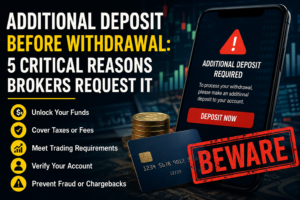
- System introduces “verification fee before withdrawal”
- Fee is framed as mandatory or regulatory
- After payment, new fees appear
This progression is important because it shows the fee is not a random event — it is part of a structured escalation pattern.
3. Why This Fee Is So Effective (Psychological Layer)
The reason the verification fee before withdrawal tactic works is not technical — it is psychological.
At this stage, users are already emotionally invested. They are not evaluating the platform as a new service — they are trying to recover something they believe is already theirs.
This creates three key psychological pressures:
- Loss aversion (fear of losing already “earned” funds)
- Commitment bias (already deposited, so continue believing)
- Urgency pressure (fear of losing account access)
These conditions make rational decision-making significantly more difficult.
4. Red Flags Hidden Inside Verification Fee Requests
Not every fee request is identical. However, the following indicators strongly correlate with high-risk cases:
4.1 Payment is required before withdrawal approval
Legitimate financial systems do not require users to pay to access their own funds.
4.2 Fee is described vaguely
Terms like “security clearance” or “compliance validation” without documentation are common warning signs.
4.3 Fee increases after payment
Many users report a second or third fee request after the first payment is completed.
4.4 Pressure and urgency language
Messages such as “final step required” or “account will be frozen” are commonly used escalation tactics.
4.5 Payment methods are irreversible
Crypto transfers or external payment links are frequently reported in scam cases.
5. Immediate Action Protocol (Do Not Skip This Section)
If you are currently facing a verification fee before withdrawal request, your next actions determine your recovery potential.
Step 1: Stop all further payments immediately
Even small payments are often part of escalation cycles.
Step 2: Preserve full evidence
Save screenshots, chat logs, transaction IDs, emails, and platform dashboards.
Step 3: Do not negotiate with fee demands
Additional communication often leads to further financial pressure.
Step 4: Contact your bank or payment provider
Request dispute or chargeback review as soon as possible.
Step 5: Document timeline of events
A structured timeline significantly improves case handling with financial institutions.
6. Recovery Pathway (What Happens Next)
Recovery outcomes vary depending on timing, payment method, and documentation quality. However, most structured recovery cases follow this path:
- Initial dispute filed with bank or provider
- Transaction review initiated
- Platform flagged or investigated
- Funds may be reversed or partially recovered (case-dependent)
Speed is a critical factor. The earlier the response, the higher the potential recovery success rate.
If you need structured help, use these guides:
7. Related Case Patterns You Should Compare
If you are unsure whether your situation matches this pattern, compare it with related cases:
- Cannot withdraw from trading platform cases
- Broker refusing withdrawal cases
- Withdrawal pending for weeks cases
- Tax before withdrawal scam pattern
External verification resource: FCA Warning List – Unauthorised Firms
8. Key Principle Most Victims Realize Too Late
The most important realization in verification fee before withdrawal cases is this:
Legitimate financial institutions do not require payment to release your own funds.
Any system that conditions withdrawal on additional payment after deposit introduces structural risk that should be treated as a high-alert scenario.
9. Verified Scam Case Evidence (Learning Section)
10. Platform Risk Intelligence
Final Briefing
If you are currently inside a verification fee before withdrawal situation, the goal is not negotiation — it is containment, documentation, and structured recovery action.
Delay reduces options. Early action preserves them.
If you lost money to Verification Fee Before Withdrawal: Legit or Scam?, act now. Fill in the form below to get a free consultation with experts who may help you trace your funds.