Broker Demand Tax Before Withdrawal – Is It a Scam? (2026 Guide)
Broker demand tax before withdrawal and told you that your funds cannot be released until additional payments are made?
If a broker demand tax before withdrawal, investors should proceed carefully and verify the request before sending additional funds.
For many investors, this demand comes as a shock. After seeing apparent profits in an account and finally requesting a withdrawal, they are suddenly informed that taxes, clearance fees, compliance charges, or government payments must be made before any funds can be accessed.
While legitimate tax obligations exist in most countries, it is important to understand that regulated financial institutions generally do not require investors to send tax payments directly to the platform before a withdrawal can be processed.
Unfortunately, demands for advance tax payments are frequently reported in cases involving high-risk investment platforms, unregulated brokers, crypto schemes, and fraudulent trading operations.
If you have been asked to pay tax before receiving your money, understanding the warning signs could help you avoid additional losses.
Not Sure If The Tax Demand Is Legitimate?
If a broker or investment platform is demanding tax payments, verification fees, compliance charges, or additional deposits before releasing your funds, an independent review may help clarify the situation.
Why A Broker Demand Tax Before Withdrawal: Investors Become Concerned When Tax Payments Are Requested
A common pattern reported by investors begins with what appears to be a successful investment experience.
The account dashboard shows growing profits. Customer support remains responsive. Additional deposits may even be encouraged as account balances increase.
Everything appears normal until the investor attempts to withdraw funds.
At that point, a message arrives stating that taxes must first be paid before any withdrawal can be processed.
The requested amount may be described as:
- Capital gains tax
- Government tax obligation
- International transfer tax
- Compliance tax clearance
- Anti-money laundering tax payment
- Cross-border transaction tax
The explanation often sounds convincing, particularly to investors who are unfamiliar with financial regulations.
However, many victims later discover that after paying the requested tax, another fee appears.
The platform may then demand:
- Verification fees
- Account activation fees
- Compliance charges
- Liquidity fees
- Withdrawal unlocking payments
- Insurance deposits
In numerous reported cases, withdrawals never occur despite multiple payments being made.
A Typical Example Of A Broker Demand Tax Before Withdrawal Scheme
Consider a hypothetical investor who deposits £8,000 into an online trading platform.
Over several months, the platform claims the account has grown to £52,000.
Encouraged by the apparent profits, the investor submits a withdrawal request.
Instead of receiving funds, customer support responds with a notice stating that a 15% tax payment must first be made before the withdrawal can be approved.
The investor pays the requested amount believing it is necessary to comply with financial regulations.
A few days later, another message arrives requesting an additional compliance payment.
Then an account verification charge.
Then a transfer clearance fee.
The withdrawal remains pending throughout the process.
Although every case is different, this pattern has appeared repeatedly in investor complaints involving questionable investment platforms and withdrawal disputes.
When a broker demand tax before withdrawal, the explanation often appears convincing because it references regulatory or compliance requirements.
How Legitimate Financial Firms Usually Handle Taxes
Understanding how regulated firms operate can help investors identify unusual requests.
In many jurisdictions, taxes are handled between the investor and the relevant tax authority.
A broker may provide tax reporting documents or transaction records, but it is generally uncommon for a legitimate firm to require clients to send tax payments directly to the broker before receiving their own money.
When evaluating any platform, investors should consider:
- Regulatory status
- Corporate transparency
- Withdrawal history
- Public complaints
- Independent reviews
- Customer support practices
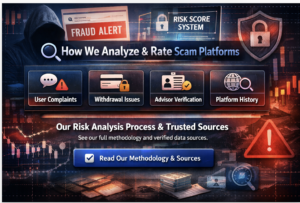
Market Due Diligence evaluates platforms using structured research methods focused on transparency, risk indicators, withdrawal concerns, and publicly available evidence.
Learn more about our evaluation process:
10 Warning Signs A Tax Before Withdrawal Demand May Be Problematic
Not every withdrawal issue automatically indicates fraud. However, investors should proceed with caution when multiple warning signs appear together.
1. Payment Must Be Sent Directly To The Platform
A major concern arises when the platform instructs you to send tax payments directly to them rather than through established tax reporting channels.
2. Cryptocurrency Payments Are Requested
Many investors report being asked to pay taxes using Bitcoin, USDT, Ethereum, or other cryptocurrencies. Such requests deserve additional scrutiny because crypto transfers are often difficult to reverse.
3. Urgent Deadlines Are Imposed
Statements such as “Pay within 24 hours or your account will be frozen” are commonly reported by investors dealing with questionable platforms.
4. The Tax Amount Changes Repeatedly
Legitimate obligations generally remain consistent. Unexpected changes to the amount due should be investigated carefully.
5. No Official Documentation Is Provided
Investors should be cautious if large payments are requested without formal documentation explaining the obligation.
6. Customer Support Refuses To Explain The Requirement
A lack of transparency regarding taxes, withdrawal policies, or compliance requirements may indicate broader concerns.
7. Additional Fees Appear After The Tax Is Paid
One of the most frequently reported patterns involves multiple payments being requested one after another while the withdrawal remains pending.
8. The Platform Has Numerous Withdrawal Complaints
Independent reviews, public complaints, and user reports can provide valuable context when assessing risk.
9. The Company Cannot Clearly Demonstrate Regulation
Investors should verify regulatory claims independently rather than relying solely on statements made by the platform.
10. You Feel Pressured To Act Quickly
Pressure tactics often reduce the likelihood that investors will conduct independent research before sending additional funds.
What Should You Do If A Broker Demands Tax Before Withdrawal?
If you receive a demand for taxes, compliance fees, or other payments before a withdrawal can be processed, consider taking the following steps before sending additional money.
- Pause all further payments.
- Save emails, messages, invoices, and screenshots.
- Record dates and amounts of all transactions.
- Review the platform’s regulatory claims.
- Search for independent reports and user complaints.
- Document all communications with support staff.
- Seek an independent assessment of the situation.
Acting carefully before making another payment may help reduce further losses.
Additional guidance can be found here:
- Cannot Withdraw From A Trading Platform? What To Do Next
- CFD Broker Refusing Withdrawal: 7 Critical Fixes
- What To Do If Your Offshore Broker Refuses Withdrawals
- Why Trading Platforms Suddenly Block Withdrawals
- Withdrawal Pending For Weeks Explained
What If You Already Paid The Tax?
Many investors only begin researching the situation after making the requested payment.
If this has happened to you, avoid assuming the situation cannot be improved.
The most important step is to stop making additional payments until the circumstances have been independently reviewed.
Gather all available evidence, including:
- Deposit records
- Withdrawal requests
- Invoices
- Email communications
- Chat conversations
- Cryptocurrency transaction records
- Bank transfer confirmations
Maintaining organized records may assist when reporting the matter or assessing available options.
Can Funds Be Recovered?
Recovery outcomes depend on numerous factors, including payment method, transaction history, timing, and the specific circumstances involved.
Every case is unique, and no recovery outcome can ever be guaranteed.
However, investors often benefit from understanding:
- How funds were transferred.
- Whether card payments were involved.
- Whether bank transfers occurred.
- Whether cryptocurrency transactions can be traced.
- Whether additional parties were involved.
- Whether regulatory reports have already been filed.
Investors should be cautious whenever a broker demand tax before withdrawal and then requests additional payments after the tax has been paid.
Helpful educational resources include:
- Lost Funds Recovery Guide
- How To Report An Investment Scam
- How To Recover Money Sent By Bank Transfer
- Crypto Investment Scam Recovery Guide
- Broker Refusing Withdrawal: Recovery Steps
Related Platform Reviews
Investors researching withdrawal concerns often review reports involving other platforms that have generated user complaints, transparency concerns, or withdrawal-related discussions.
- Cryptos Circus Review
- Bitradex AI Review
- Iguabit Review
- Weccoin Review
- Biztranex Review
- PCEX Review
- DSJ Exchange Review
- BG Wealth Sharing Review
Frequently Asked Questions
Is It Normal To Pay Tax Before A Withdrawal?
Tax obligations may exist depending on your jurisdiction, but investors should carefully verify any request requiring direct payment to a broker or platform before funds can be released.
Can A Broker Legally Hold My Funds Until Tax Is Paid?
Rules vary by jurisdiction and circumstance. Investors should independently verify any such claim and review applicable regulations.
What If I Already Paid The Requested Tax?
Stop making further payments until the situation has been independently assessed. Preserve all records and communications.
Why Does The Platform Keep Asking For More Fees?
Repeated requests for taxes, compliance charges, activation fees, or verification payments are commonly reported in withdrawal dispute cases.
How Can I Check Whether A Platform Is Legitimate?
Research the firm’s regulatory status, transparency, corporate information, user reports, and withdrawal history before making decisions.
Why Does A Broker Demand Tax Before Withdrawal?
When a broker demand tax before withdrawal, investors should carefully verify the request before sending additional funds. Multiple fees, repeated payment requests, and withdrawal delays may indicate elevated risk.
What Does It Mean When A Broker Demand Tax Before Withdrawal?
When a broker demand tax before withdrawal, investors should independently verify the request and avoid making further payments until the situation has been reviewed.
Additional Investor Resources
Investors can also review guidance published by financial regulators and consumer protection organisations.
- Financial Conduct Authority (FCA)
- Action Fraud UK
- U.S. Securities and Exchange Commission (SEC)
- Investor.gov
Need Help Understanding A Withdrawal Problem?
If a broker demand tax before withdrawal and you are unsure whether the request is legitimate, consider obtaining an independent assessment before sending more money.
If you’ve lost money to a scam broker or platform, act now. Fill in the form below to get a free consultation with experts who may help you trace your funds.