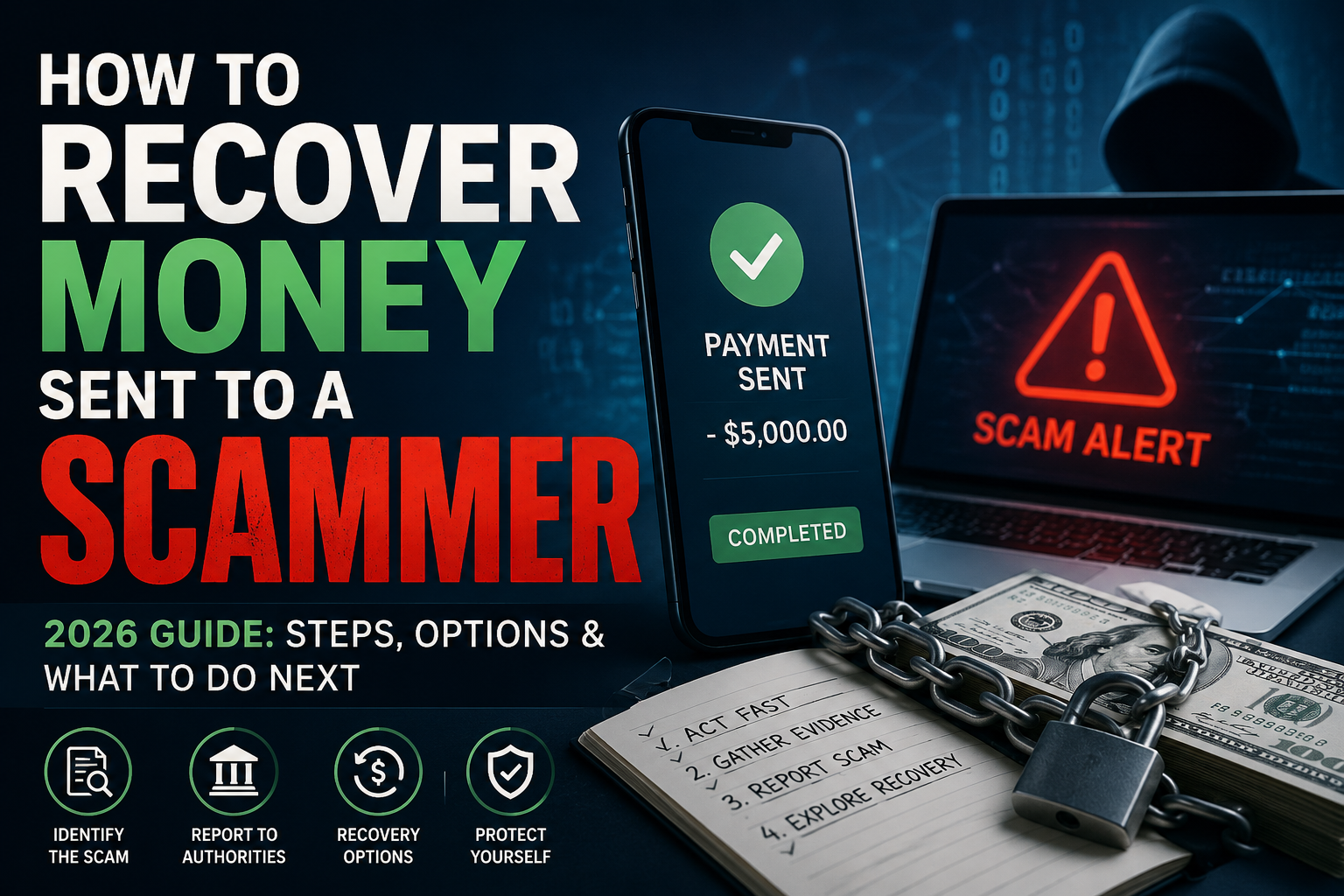
Introduction to How To Recover Money Sent To A Scammer (2026 Guide)
If you are searching for how to recover money sent to a scammer, chances are the situation is already urgent. Many victims only realize they’ve been targeted after funds disappear, withdrawals are blocked, or additional fees are requested by a fake investment platform or scammer.
This guide from Market Due Diligence explains what happens after a scam, what recovery options exist, and how to avoid secondary fraud attempts that often target victims again.
Before taking action, readers should review: How We Evaluate Platforms and Methodology & Sources.
Table of Contents
- Quick Takeaways
- Immediate Steps After Sending Money
- Can Money Be Recovered?
- Recovery Options by Payment Method
- Cryptocurrency Recovery
- Bank Transfer Recovery
- Card Payment Recovery
- Common Recovery Scams
Quick Takeaways
- Stop sending money immediately
- Document all transactions and communications
- Contact your bank or payment provider as soon as possible
- Be cautious of recovery services requesting upfront fees
- Report the incident to official regulators
What Happens After You Send Money to a Scammer
In most scam cases, funds are quickly moved through multiple accounts or crypto wallets. This makes recovery more complex over time. However, early reporting can sometimes help banks or payment providers flag or freeze transactions.
Many scams follow a predictable pattern:
- Initial deposit appears successful
- Fake profits are displayed in an account dashboard
- Withdrawal requests are delayed or blocked
- Additional fees are requested
This pattern is commonly seen in cases listed in our scam case reports.
Step 1: Stop All Further Payments
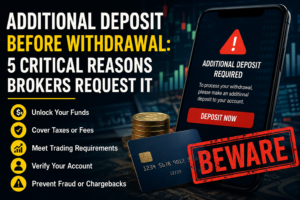
One of the most important actions is to stop sending any additional money. Scammers often introduce “final fees” such as:
- Tax clearance payments
- Verification fees
- Wallet activation charges
- Security unlock fees
These requests are not legitimate financial requirements and often indicate continued fraud attempts.
Step 2: Preserve Evidence Immediately
Evidence collection is critical. You should save everything related to the transaction.
- Bank or card statements
- Crypto wallet addresses and transaction IDs
- Email conversations
- Chat logs (WhatsApp, Telegram, etc.)
- Screenshots of the platform or dashboard
For structured guidance, see: Steps After Encountering a Suspicious Platform.
Can You Recover Money Sent to a Scammer?
Recovery depends on the payment method, speed of reporting, and whether funds are still traceable or accessible through financial institutions.
In general:
- Card payments may allow disputes or chargebacks
- Bank transfers may sometimes be recalled if acted on quickly
- Crypto transactions are usually irreversible but may be traceable
Recovery by Payment Method
Bank Transfers
Contact your bank immediately. Some banks may attempt recovery procedures depending on timing and destination.
Related guide: Cannot Withdraw From a Trading Platform
Credit and Debit Cards
Card providers may offer dispute processes depending on transaction type and jurisdiction.
Cryptocurrency
Blockchain transactions cannot be reversed, but transaction tracing may support investigations.
Cryptocurrency Scam Recovery Explained
Crypto scams are among the most difficult cases due to decentralized transfers and wallet anonymity layers. However, blockchain transactions remain publicly recorded.
Victims should document:
- Wallet addresses
- Transaction hashes
- Exchange deposit records
Learn more about scam patterns: Crypto Scam Alerts 2026
Common Recovery Scams
After a scam, victims are often targeted again by fake recovery services. These services typically:
- Promise guaranteed recovery
- Request upfront fees
- Claim insider connections
- Use urgency tactics
Always verify legitimacy before engaging any recovery service.
Recovery Resources
💡 Recovery Guidance
- Review official guidance from the Financial Conduct Authority (FCA)
- Check investor protection resources at the U.S. Securities and Exchange Commission (SEC)
- Read our internal guide: Lost Funds Recovery Guide
- Learn how to report fraud: How to Report an Investment Scam
- Understand risk signals: Scam Warning Signs Every Investor Must Know
Be cautious of any third party claiming guaranteed recovery. Always verify legitimacy independently before sharing personal or financial information.
How to Recover Money Sent to a Scammer: Immediate Steps
One of the most overlooked risks after losing money online is secondary fraud. Recovery scammers specifically target victims who are already vulnerable.
- Do not trust “guaranteed recovery” claims
- Avoid paying upfront fees for recovery services
- Be suspicious of unsolicited recovery messages
- Verify companies through independent regulatory sources
Learn more in our guide: How to Detect Fake Financial Advisors
What to Do After Being Scammed Online
The first 24–72 hours are critical. Your actions during this period can influence whether financial institutions can trace or flag transactions.
- Contact your bank or payment provider immediately
- Report the scam to relevant authorities
- Secure your accounts and change passwords
- Document everything in detail
Risk Awareness Summary
Most online investment scams rely on similar operational patterns: false returns, blocked withdrawals, and escalating fee requests. Understanding these patterns helps users avoid repeating the same cycle.
For deeper analysis, see: Why Trading Platforms Suddenly Block Withdrawals
FAQ – How To Recover Money Sent To A Scammer
Can I recover money sent to a scammer?
Recovery depends on payment method and timing. Some bank and card payments may be disputed, but outcomes vary significantly.
Is cryptocurrency recoverable?
Crypto transactions are generally irreversible, but blockchain analysis may help trace funds in some cases.
Should I pay a recovery company upfront?
Be cautious. Many recovery scams request upfront fees without delivering results.
How fast should I act after a scam?
Immediately. Early reporting increases the chance of intervention by banks or payment processors.
Where should I report a scam?
Start with your bank, then report to regulators such as the FCA or SEC depending on your location.
Understanding how to recover money sent to a scammer depends on fast action and proper reporting.
Related Reviews & Scam Reports
Final Conclusion
If you are trying to understand how to recover money sent to a scammer, the reality is that outcomes depend heavily on speed, payment method, and documentation.
While some recovery options may exist through banks, card providers, or regulatory reporting, no outcome is guaranteed. The most important step is acting quickly, preserving evidence, and avoiding secondary scams that target victims after the initial loss.
Market Due Diligence encourages readers to focus on verification, transparency checks, and independent research before engaging with any online investment platform.
If you’ve lost money to a scam broker or platform, act now. Fill in the form below to get a free consultation with experts who may help you trace your funds.