Introduction
This forex scam case study breaks down how traders actually lose their funds — and the warning signs that were missed along the way. The forex market is one of the largest financial markets in the world, but its popularity also attracts fraudulent operators.
Many scam brokers target beginners with promises of quick profits, managed accounts, and low-risk trading. Victims often realise the truth only when withdrawals are delayed or blocked.
Reviewing a real forex scam case study like this one can help you recognize the same pattern before it happens to you — from the first deposit to the moment communication stops.
If you are researching platform safety, start with our guide on how we evaluate platforms.
How Traders Lose Funds
Many forex scams begin through:
- social media advertisements
- messaging apps
- fake review sites
- cold calls
- influencer promotions
- “AI trading system” claims
The pitch is often:
- Start with £250
- Earn passive returns
- Expert traders manage everything
- Low risk, high reward
This creates false trust before users perform due diligence.
To learn early warning signs, read how to detect fake brokers in 5 minutes.
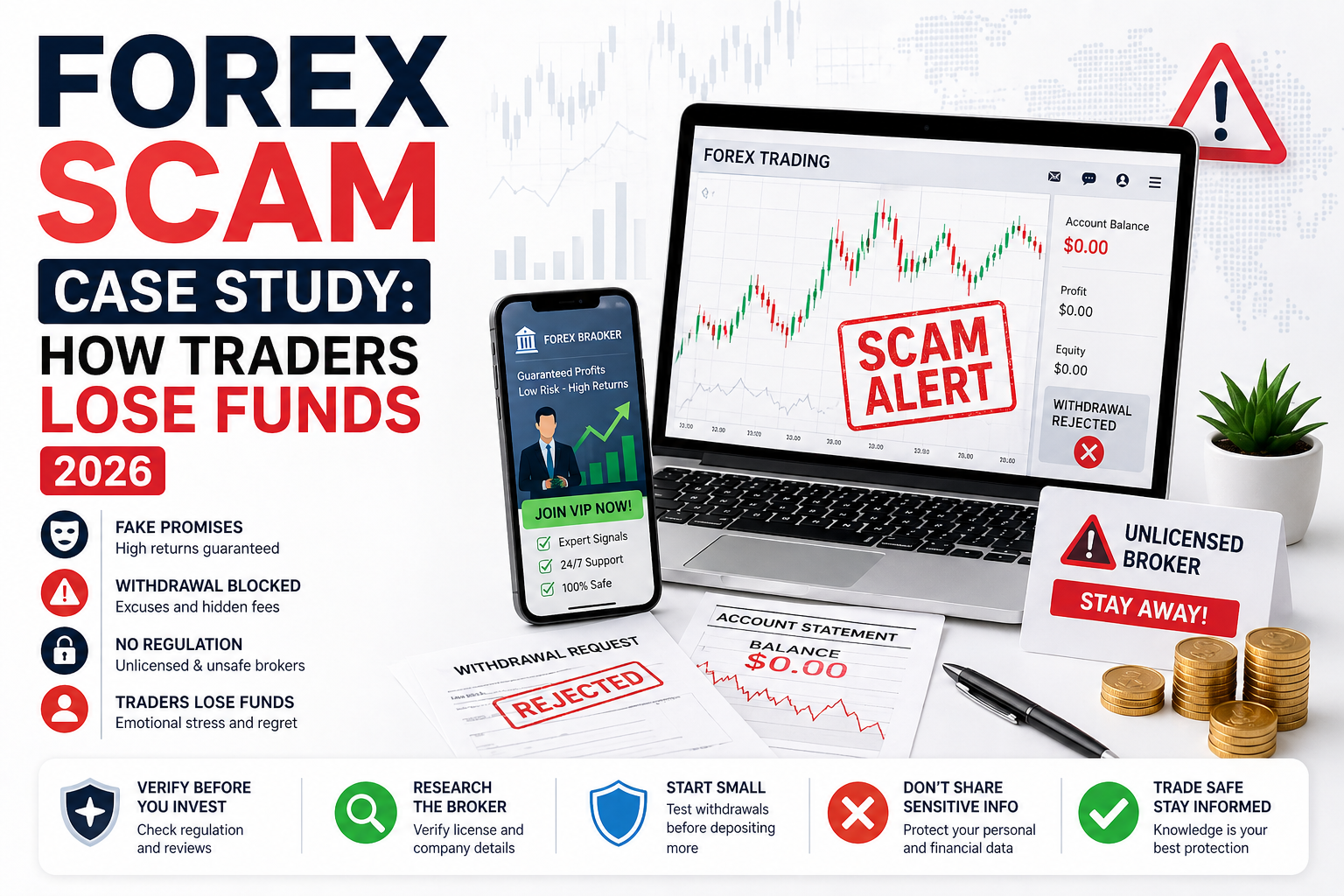
Stage 1: The First Deposit
Victims are encouraged to deposit small starter amounts such as:
- £250
- £500
- £1,000
The dashboard usually appears professional with charts, balances, and profitable open trades.
Why this matters:
In many scams, displayed profits are simply numbers on a screen.
They may not reflect any real trading activity.
If you are new to investing, review best brokers for beginners 2026 for safer starting points.
Stage 2: Pressure to Deposit More
After fake gains appear, an “account manager” often contacts the user.
Common tactics include:
- You are performing well
- Add more funds for VIP access
- Markets are moving now
- This opportunity is limited
- Increase your balance for higher returns
This psychological pressure is a common fraud tactic.
Learn how risk scoring works in our platform risk score methodology.
Stage 3: Withdrawal Problems Begin
When users request withdrawals, excuses often appear:
- Additional verification required
- Tax must be paid first
- Bonus turnover not completed
- Compliance review pending
- Upgrade account tier first
- Processing delay with finance team
This is one of the clearest scam warning signs.
If you are currently stuck, read cannot withdraw from a trading platform: what to do next.
Also see broker withdrawal problems: what to do.
Stage 4: Communication Stops
After repeated complaints:
- calls stop
- emails go unanswered
- live chat disappears
- account managers vanish
- the website may later go offline
At this stage, many victims discover they were dealing with a scam platform.
If you have encountered suspicious activity, follow steps to take after encountering a suspicious platform.
What Warning Signs Were Missed?
1. Guaranteed Profits
No legitimate broker can guarantee returns.
2. Aggressive Sales Pressure
Repeated calls pushing deposits are a major warning sign.
3. Fake Dashboard Gains
A visible balance does not prove real execution.
4. Withdrawal Excuses
Repeated delays often happen before a collapse.
Read pay tax before withdrawal scam: what to do.
5. Weak or False Regulation Claims
Many scams misuse regulator names or copy real firms.
For proper checks, use verify online investment platforms.
Trusted External Resources
Before opening an account, check official sources:
- Financial Conduct Authority register
- U.S. Securities and Exchange Commission investor alerts
- European Securities and Markets Authority public warnings
Prevention Tips
Use this checklist before joining any broker:
- verify regulation directly
- search complaint history
- test withdrawals with small amounts
- read independent reviews
- avoid leverage if inexperienced
- never trust pressure tactics
- use strong passwords and 2FA
If you are new to trading, review: Best Brokers for Beginners 2026.
How to Avoid Forex Scams
Before opening any account:
- verify regulation independently
- search complaint history
- start with small deposits
- test withdrawals early
- avoid pressure tactics
- never share remote device access
- understand leverage risks
For broader standards, read our editorial principles and methodology & sources.
What to Do If You Already Sent Money
Take action quickly:
- stop sending additional money
- request withdrawal in writing
- save all chats and screenshots
- contact your payment provider
- report to relevant authorities
- document everything
You may also need lost funds recovery guide: step-by-step guide.
Recent Scam Alerts Worth Monitoring
Stay informed through:
- Crypto Scam Alerts 2026: Latest Warnings & Red Flags
- Investment Scam Alerts 2026: Latest Risks & Warnings
- Broker Scam Alerts 2026: 9 Forex & CFD Red Flags
- Scam Case Reports 2026: Real Investor Loss Stories
- Platform Watchlist 2026: High Risk Platforms
Related Platforms Reviewed
Examples of platforms users researched include:
- Cryptos Circus Review
- Goliath Ventures Review
- Immediate Edge Quantum AI Review
- Weccoin Review
- Biztranex Review
- Bitwon Exchange Review
- PCEX Review
- Iguabit Review
Final Verdict
Most forex scams follow a repeating pattern:
Trust → Deposit → Fake Profits → Bigger Deposit → Withdrawal Block → Silence
Forex trading itself is legitimate, but scam brokers exploit the market’s popularity. Every forex scam case study we’ve reviewed shares this same underlying structure.
The safest rule is simple:
Verify the broker first. Never trust profits you cannot withdraw.
For full transparency, see our disclaimer & editorial transparency page.
If you’ve lost money to a scam broker or platform, act now. Fill in the form below to get a free consultation with experts who may help you trace your funds.