
Withdrawal Problems Hub: Broker Delays, Blocked Funds & Recovery
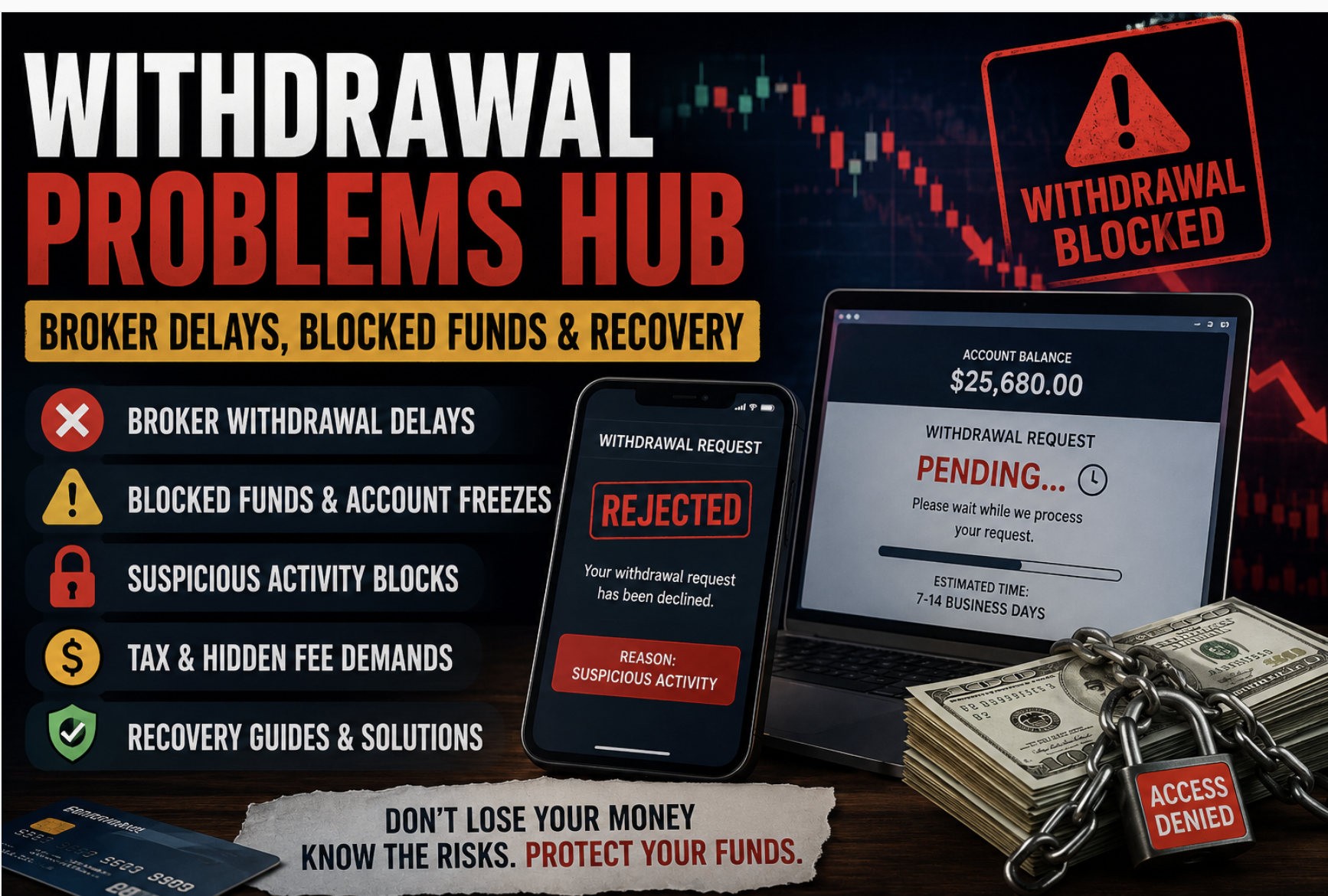
Withdrawal Problems Hub is a central investor protection resource designed to help traders understand why brokers block withdrawals, delay payouts, freeze accounts, or introduce unexpected restrictions after deposits or profitable trades.
In 2026, withdrawal-related complaints continue to rise across CFD brokers, forex trading platforms, crypto exchanges, offshore investment firms, and high-risk online trading apps. While some delays may be caused by compliance procedures, many cases involve deeper risks including platform manipulation, liquidity issues, hidden withdrawal policies, or outright scams.
This hub connects investors with educational guides, scam alerts, platform reviews, recovery resources, and broker verification tools to help reduce financial risk and improve trading safety.
This Withdrawal Problems Hub was created to help traders understand the most common broker withdrawal risks, delayed payout tactics, and account restriction issues affecting investors in 2026.
Why Withdrawal Problems Are Increasing in 2026
The growth of online trading platforms has made investing more accessible, but it has also created opportunities for unregulated brokers and fraudulent operations to target retail traders.
Many platforms aggressively advertise high returns, fast profits, AI trading systems, copy trading services, or guaranteed investment opportunities. Problems often begin only after users attempt to withdraw funds.
Common withdrawal complaints include:
- Withdrawal requests remaining “pending” for weeks
- Unexpected taxes or unlocking fees
- Frozen trading accounts after profitable trades
- Repeated KYC verification loops
- Pressure to deposit additional money before withdrawals
- Support teams becoming unresponsive
- Accounts flagged for suspicious activity without explanation
Learn more about platform withdrawal behavior here: Why Trading Platforms Suddenly Block Withdrawals
Most Common Broker Withdrawal Problems
1. Broker Refusing Withdrawals
One of the strongest warning signs is when a broker outright refuses to process withdrawals. This often occurs after investors become profitable or attempt to withdraw large balances.
Related guide: CFD Broker Refusing Withdrawal Guide
2. Suspicious Activity Withdrawal Blocks
Some platforms claim accounts are under review for suspicious activity immediately after withdrawal requests are submitted. In legitimate cases, compliance checks may occur, but repeated unexplained restrictions are a serious red flag.
Read more: Broker Withdrawal Problems Guide
3. Tax Before Withdrawal Scams
Scam brokers frequently demand fake taxes, liquidity fees, unlocking charges, or “clearance payments” before funds can supposedly be released.
Legitimate regulated brokers usually deduct applicable fees directly from account balances rather than requiring upfront payments.
Protection guide: Pay Tax Before Withdrawal Scam
4. KYC Verification Loops
Many users report endless requests for additional identity verification after profits are generated. While compliance procedures are normal within regulated financial systems, repeated unresolved KYC demands can indicate stalling tactics.
5. Delayed Withdrawals After Winning Trades
Some CFD platforms become problematic only after traders begin generating large profits. Delays, account restrictions, and “risk reviews” may suddenly appear.
Additional resource: Cannot Withdraw Trading Funds Guide
Common Scam Tactics Linked to Withdrawal Problems
High-risk brokers and fraudulent trading operations often follow similar behavioral patterns.
- Guaranteed profit marketing
- Pressure from aggressive account managers
- Fake AI trading systems
- Celebrity endorsement scams
- Telegram or WhatsApp investment groups
- Copy-trading manipulation
- Pressure to increase deposits after initial success
Investor warning signs: Scam Warning Signs Every Investor Must Know
What To Do If You Cannot Withdraw Funds
If your broker delays or blocks withdrawals, early action is extremely important.
Step 1: Stop Depositing Money
Do not send additional funds to “unlock” your account or pay unexpected release fees.
Step 2: Preserve Evidence
Save:
- Emails
- Chat logs
- Account screenshots
- Transaction records
- Withdrawal requests
Step 3: Submit Formal Requests
Use official communication channels only. Avoid relying solely on Telegram or WhatsApp conversations.
Step 4: Verify Regulation Status
Verification guide: Verify Trading Platform Legitimacy
Step 5: Follow Recovery Procedures
Recovery resource: Lost Funds Recovery Guide
Additional help: Cannot Withdraw From Trading Platform – What To Do Next
High-Risk Platform Reviews Linked to Withdrawal Complaints
Many platforms reviewed in 2026 show recurring user concerns involving withdrawals, transparency, and communication issues.
- Weccoin Review
- DSJ Exchange Review
- Biztranex Review
- PCEX Review
- Astertrust Review
- Bitwon Exchange Review
- Triff Holdings Review
Offshore Brokers and Withdrawal Risks
Offshore brokers often operate in lightly regulated jurisdictions, making investor protection significantly weaker than with FCA, ASIC, SEC, or EU-regulated firms.
Read: What To Do If Offshore Broker Refuses Withdrawals
How To Detect Fake Brokers Before Depositing
Investors should independently verify trading platforms before funding accounts.
Important checks include:
- Regulatory licensing
- Ownership transparency
- Withdrawal reliability
- Independent reviews
- Company registration records
- Risk disclosures
Detection guide: How To Detect Fake Brokers
Platform verification resource: Verify Online Investment Platforms
Safer Alternatives for Traders
Traders seeking lower-risk platforms should focus on brokers with strong regulatory oversight, transparent operations, and reliable withdrawal systems.
- Safest Regulated Brokers UK
- Low Risk Trading Platforms
- Best CFD Brokers With Low Risk Exposure
- Secure Trading Apps For Active Traders
Educational Resources & Transparency Standards
Understanding how platforms are evaluated is an important part of reducing investment risk.
The Withdrawal Problems Hub also connects investors with scam prevention resources, broker verification guides, and recovery education tools.
Frequently Asked Questions
Can brokers legally delay withdrawals?
Regulated brokers may delay withdrawals temporarily for compliance or verification reasons. However, repeated unexplained restrictions, fee demands, or blocked access can indicate elevated risk.
Should I pay taxes before a withdrawal is released?
Unexpected upfront tax demands are a common scam tactic. Regulated firms usually deduct fees directly from balances rather than requiring external payments.
How do I know if a broker is fake?
Warning signs include lack of regulation, withdrawal complaints, unrealistic profit claims, aggressive account managers, and poor transparency.
What is the safest way to verify a broker?
Use independent regulator databases, review transparency disclosures, and research platform history before depositing funds.
As the online trading industry grows, the Withdrawal Problems Hub will continue expanding with new broker reviews, withdrawal investigations, and investor protection resources.
Final Thoughts
Withdrawal problems are often the first major warning sign that a trading platform may be operating with elevated financial or regulatory risk.
Whether you are dealing with blocked withdrawals, suspicious activity restrictions, delayed payouts, or offshore broker issues, early action and independent verification are critical.
The goal of this Withdrawal Problems Hub is to provide educational guidance, platform transparency insights, and investor protection resources to help traders make safer financial decisions in 2026.
Investors using this Withdrawal Problems Hub should always verify platforms independently before depositing funds into any CFD, forex, or crypto trading service.
Important Financial Regulators
Investors should independently verify broker regulation through official financial authorities.
- UK Financial Conduct Authority (FCA)
- U.S. Securities and Exchange Commission (SEC)
- International Organization of Securities Commissions (IOSCO)